
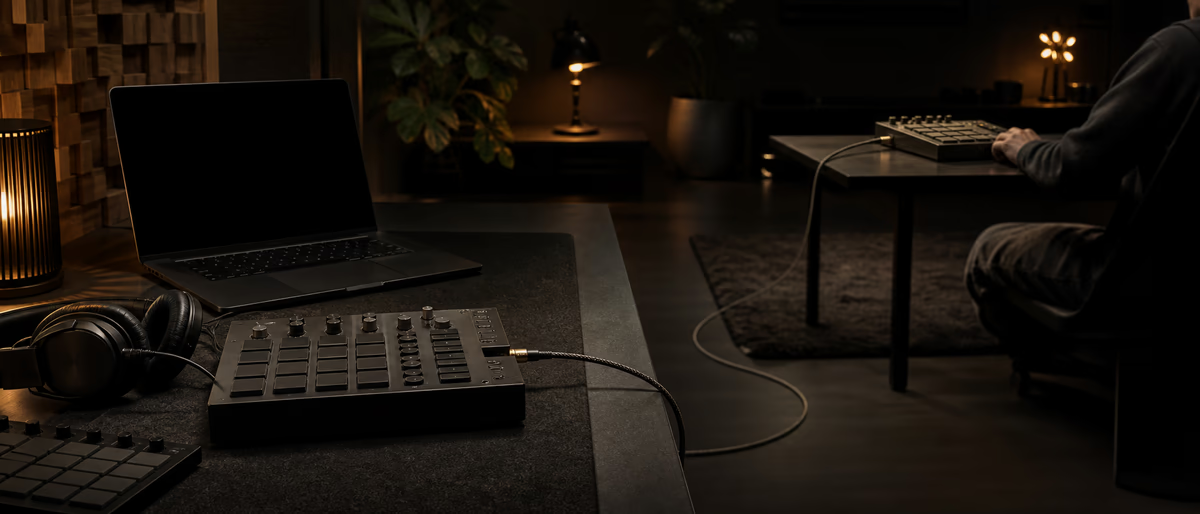
Remote beat collab
Rychlá odpověď
Remote beat collab works when you agree BPM, key, sample rate, stem layout, and ownership before anyone rewrites the session. Exchange WAV 24-bit stems (not only project files), label every version, and put writer/publisher splits in writing before distribution. Plugg Supply helps both sides source verified samples so the release does not stall on unclear pack licenses.
Before You Send Files
Remote collaboration fails less often from talent gaps than from missing context. Before you upload anything, write a short README with BPM, musical key and scale, sample rate (usually 44.1 or 48 kHz), bit depth, swing/groove template notes, and arrangement markers (intro, verse, hook, bridge, outro). If the beat uses a half-time feel or a double-time hat pattern, say so in plain language so the other producer does not “fix” something intentional.
Bounce the 808 with enough tail so the low end does not click when partners re-import. Include a dry instrumental reference and a simple mixed reference around streaming loudness so they hear intent without guessing. If vocals or ad-libs will be shared for mix feedback, export dry leads plus wet send buses separately—printing only a stereo bus forces the next person to reverse-engineer your effects.
Name the project once and stick to it: artist_beatTitle_140_Fm_v03 is clearer than five copies of final_FINAL2. Put the same string in the folder, the stem prefix, and the chat message. That single habit saves hours when three people claim they opened “the last version.”
File Formats That Survive Different DAWs
| Asset | Format | When to use | Risk if skipped |
|---|---|---|---|
| Stems / groups | WAV 24-bit, same sample rate as project | Default for any multi-DAW collab | Quality loss, timing drift after conversion |
| Reference mix | WAV or high-bitrate MP3 | Quick feedback, mobile listening | Partners misjudge balance from phone compression only |
| MIDI | Standard MIDI / SMF | Melody, chords, 808 notes when synth is shared | Partner cannot recreate your preset tone |
| Native project | FLP / ALS / Logic package | Only same DAW + major version + plugins | Missing plugins, broken routing, “works on my machine” |
| Sample pack list | TXT/PDF with product + license note | Any commercial release path | DMCA or store claim after upload |
Prefer stems over full project exchange unless you already know both sides run the same DAW major version and the same plugin list. Stems are boring—and boring is reliable. When you do send MIDI for an 808 or lead, attach the preset file or a short audio print of that part so the partner can A/B their recreation.
Keep one “print” policy: time-aligned stems starting at bar 1 (or a documented bar offset), no mystery silence at the start. Document whether you used Ableton Link, FL time signature changes, or tempo automation. Tempo maps that live only inside one DAW are a common source of “your kick is late” arguments that are really export errors.
Cloud Storage and Versioning
Pick one cloud root and treat it as the source of truth: Dropbox, Google Drive, OneDrive, or a private Splice-style project folder. Nested personal copies in WhatsApp, Discord, and email create fork wars. Use dated folders: 2026-07-24_v04_hook_rewrite, not newnew.
Enable version history on the cloud provider so a bad overwrite is recoverable. Large stem zips belong in cloud links, not compressed chat attachments that strip metadata. If file size is painful, zip lossless stems and keep the reference mix separate for phone feedback.
Agree who may overwrite master folders. A practical rule: only one “release engineer” role can rename the _current folder; everyone else uploads into dated subfolders. That role can rotate, but the rule should not.
- vNN numbering Increment on any arrangement or mix change that others should hear. Never reuse a number.
- Changelog.txt Two to five bullets: what changed, what is frozen, what still needs work.
- Lock after approve When a vocal or beat is approved, move it to
/approvedand stop silent edits.
Splits, Credits, and Master Ownership
Agree writer and publisher percentages in writing before anyone uploads to a distributor. A text message that says “we’ll split 50/50” is better than nothing, but a dated split sheet or short contract is better still. Clarify whether the beat lease/exclusive history, sample clearances, and beatstore takedowns are already clean.
Separate composition rights (melody, chords, lyrics, beat composition) from sound recording (master) rights. Remote sessions often blur “who produced” vs “who mixed” vs “who wrote the topline.” Name each role in the README so PRO registrations and Spotify credits do not become a second negotiation after the song charts locally.
This guide is operational, not legal advice. Work-for-hire language, moral rights, and default joint-authorship rules vary by country. If money or exclusivity is material, have a qualified professional review the final paper before signatures.
Feedback Loops Across Time Zones
- Define turnaround windows
Agree 24–48 hour windows for notes so async work does not feel like ghosting. If someone needs a weekend, say so up front. - Timestamp every note
Use bar:beat or mm:ss on the reference WAV. “Make the hook cooler” is not actionable; “0:42–0:58 hats too loud vs 808” is. - Batch revisions
One revision round per milestone (beat lock, vocal lock, mix lock) prevents infinite ping-pong. - Prefer short loom-style video notes
A 90-second screen capture often replaces five paragraphs of chat argument about arrangement. - Freeze approved sections
When a section is locked, mark it frozen so later “small tweaks” do not reopen the whole song.
Sample Hygiene for Shared Sessions
Both producers need rights that match the release plan. A free pack that allows demos but bans monetized streaming is not “fine for Spotify.” Keep license PDFs or store receipts in the project folder. If one partner brought a loop, that partner owns the clearance task unless you rewrote it enough to create a new work—and even then, counsel matters when the source is famous.
Verified packs from catalog sources (including Plugg Supply’s checked archives delivered via Telegram) reduce the risk of infected or mislabeled freebies. Still read the pack license: “free” is not a synonym for “exclusive worldwide master rights forever.”
For uncleared interpolations or famous melodies, stop and clear before spending mix days. Remote collaborators often assume the other person “already cleared it.” Put sample ownership in the same checklist as splits.
When Someone Else Mixes or Masters
Export dry stems (no bus limiting), print FX returns as separate tracks when space design matters, and include a rough mix reference. Note any intentional clipping, parallel saturation, or mono-summed low end. If the mixer should not “fix” your 808 mono fold, say so.
A practical target for the rough reference is roughly −14 LUFS integrated with true peak under −1 dBTP so streaming translation is predictable, but do not force the creative rough to be a final master. Label whether the reference is creative or delivery-ready.
Send a track list with peak levels and any soloed problem bars. Remote mixers burn time re-labeling “Audio 12” and guessing which pad is the dark bed.
Create a Handoff Proof Folder
Before anyone uploads the beat commercially, save a proof folder with: final reference, stem pack, README (BPM/key/sample rate), split note or contract, sample licenses, export date, approved credits, and contact emails for PRO registration.
Remote collaborations fail when everyone remembers a different version of the agreement. The proof folder is boring paperwork that protects the friendship when the song starts earning. Duplicate that folder offline once—cloud accounts get locked, people change phones, and Discord search is not an archive strategy.
Tools Stack That Usually Works
- Transfer Cloud drive with version history; optional SFTP for label handoffs.
- Notes Shared doc or Notion page linked from the README; avoid only chat threads.
- Listening Same reference track on both sides for monitoring sanity checks.
- Session calls Optional; use for arrangement decisions, not for file transfer.
You do not need a dozen SaaS tools. You need one storage root, one naming convention, one decision log, and stems that open everywhere. Everything else is optional polish.
Verified Tools on Plugg Supply
When collaborators need matching free synths, drum one-shots, or utility plugins so MIDI handoffs sound close, browse Plugg Supply’s checked free VST and sample catalog. Delivery runs through Telegram so you avoid random “free VST” adware mirrors.
- Browse the catalog
Use /software/vst or sample library pages that match the collab needs. - Install safely
Extract only the provided archive and rescan your DAW plugin list before the next stem pass.
Lock naming, stems, and splits on your next remote session—then grab verified free tools or samples only if the collab still has a gap.
Learning path
Související answer huby
Často kladené otázky
- Should I send the full project file?
- Only if both sides share the same DAW major version and plugins. Otherwise export WAV 24-bit stems plus a reference mix—stems are the universal format.
- When is MIDI better than audio for the 808?
- When the partner has the same synth/preset (or a close substitute) and you need note edits. Always attach an audio print of the 808 for tone reference.
- Do we need a split sheet for unpaid collabs?
- Yes before monetization or pitching. Unpaid does not mean “no rights.” Capture percentages and roles while everyone still agrees.
- What cloud service is best?
- Any service with reliable version history and enough storage. Clarity of folders beats brand loyalty.
- How do we handle different time zones?
- Async stems, timestamped notes, and 24–48 hour response windows. Short video notes beat marathon calls.
- Who is responsible for sample clearance?
- Usually the person who introduced the sample, unless the contract reassigns it. Document licenses in the handoff folder either way.
- What sample rate should remote sessions use?
- Match the project you started (commonly 44.1 or 48 kHz) and never convert mid-collab without telling everyone. Resampling without a plan causes subtle timing and tone shifts.
- How do we stop infinite revisions?
- Define milestones (beat lock, vocal lock, mix lock) and one revision round each. Extra rounds are a paid or explicitly agreed scope change.