
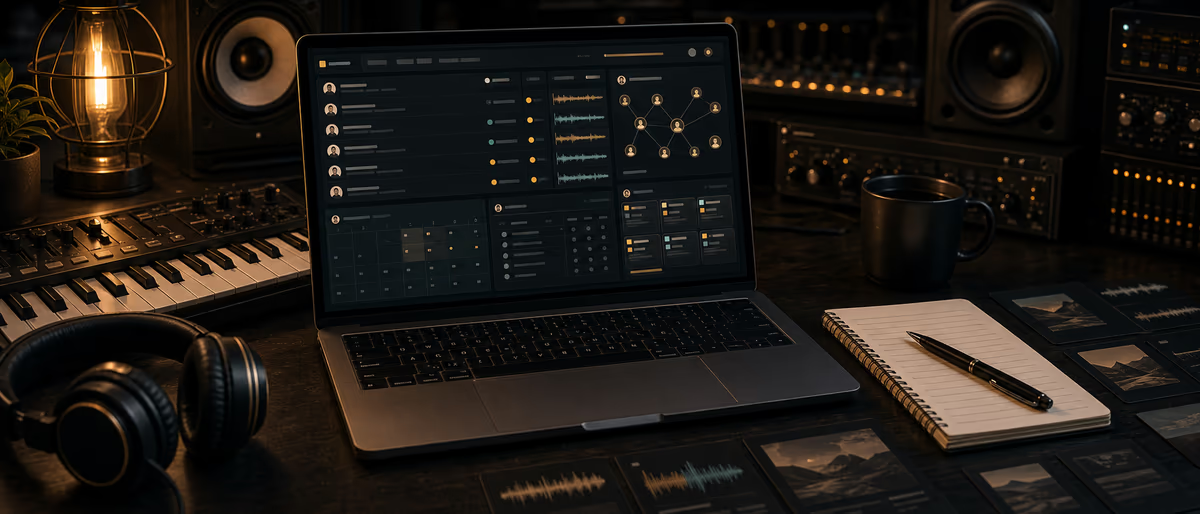
Music supervisor outreach database
Místní kontext
Právní, daňová, privacy, autorská, licenční a smluvní pravidla se liší podle jurisdikce. Tento článek berte jako redakční výchozí bod, ne jako právní nebo účetní radu.
Před jednáním ověřte místní zákony, platební metody, dostupnost platforem, daně a správu hudebních práv ve vaší zemi.
Rychlá odpověď
A supervisor outreach database stores who buys what, how they accept music, what you sent, when to follow up, and how the relationship is going. It stops cold-email amnesia and protects you from pitching uncleared tracks into premium briefs.
Why a Database Beats a Notes App Graveyard
Sync careers compound through relationships. If every pitch is a one-off Gmail search for “supervisor trailer,” you will re-introduce yourself forever and accidentally re-send the same cue they already passed on.
Your database is not a purchased “10,000 supervisor emails” spam list. It is a small, accurate graph of people and companies you earned the right to contact — updated after every brief, pass, and placement.
Database Schema
| Table | Key fields | Notes |
|---|---|---|
| Contacts | contact_id, name, role (supervisor/agent/coordinator), company, email, form_url, linkedin, city, timezone | One human per row |
| Orgs | org_id, type (studio/agency/network/library/brand), site, notes | Link many contacts |
| Taste_Profile | contact_id, genres, moods, media (ads/tv/film/games), territory focus, do_not_send | Prevents bad-fit spam |
| Submission_Rules | contact_id, accepts_unsolicited (Y/N), preferred_format, max_tracks, private_link_ok, exclusivity_notes | Honor their process |
| Catalog_Map | track_id, one_stop_flag, moods, bpm, instrumental, sensitive_flags | What you can legally pitch |
| Submissions | sub_id, date, contact_id, track_ids, brief_ref, channel, result, fee_if_any, notes | History of every send |
| Follow_Ups | sub_id, due_date, status, message_type | Calendar discipline |
| Relationship | contact_id, last_touch, warmth (cold/warm/hot), favors, referrals | Human layer |
Notion, Airtable, or a simple multi-tab spreadsheet all work. Relationships matter more than software brand.
Ethical Contact Sourcing
- Credits End titles, Tunefind-style research, press interviews — build from real projects that match your sound.
- Directories and societies Guild/association lists where public; verify emails still live.
- Referrals Warm intros beat cold volume. Log who introduced whom.
- Open calls / briefs When they publish a brief, log the brief_ref and deadline first.
- Do not Buy scraped personal emails or blast the same Drive folder to 500 people.
Outreach Workflow
- Filter by taste + rules
Only contacts whose media/genres match and who allow your channel. - Filter catalog by one_stop
Never pitch uncleared samples into ad briefs. - Pick 1–3 tracks max
Quality shortlist with timed edits if the brief needs :15/:30. - Send with log row
Create Submissions entry before you hit send so you cannot “forget.” - Schedule follow-up
Often +7 to +14 days if rules allow; never daily pings. - Record result honestly
pass / hold / licensed / no_reply / wrong_fit. Update warmth.
Cold Email Skeleton (When Allowed)
- Subject One-stop instrumentals for [ads/sports/doc] — [Your Catalog Name]
- Opener Specific project of theirs you admired (one line).
- Offer 2 links max, BPM/mood, one_stop confirmation, rights contact.
- Close Easy no. Invite them to state preferred submission path for future.
Common Mistakes
- Mass CC blasts Ends relationships before they start.
- Pitching without clearance Wastes legal time on their side; you get blacklisted quietly.
- No submission history You will re-pitch rejects.
- Treating libraries and supervisors identically Different buyers, different exclusivity risks.
- Updating contacts only when desperate Weekly 20-minute hygiene beats quarterly archaeology.
Brief Response Log (Extra Table)
When a public or private brief hits, create a brief row before you hunt contacts: brief_id, source, deadline, media, territory, exclusivity, mood keywords, one_stop_required, your shortlist track_ids, sent_on, result. This prevents “I think I answered that trailer brief” amnesia during busy weeks.
| Field | Example | Why |
|---|---|---|
| brief_id | BR-2026-07-03 | Key |
| deadline | 2026-07-05 17:00 ET | Triage |
| media_scope | online paid + social | Quote accuracy |
| exclusivity | category bank US 12mo | Conflict check |
| tracks_sent | Glass Highway; Quiet Engine | No re-sends |
| result | pass_temp_love / hold / licensed | Learning |
Weekly Hygiene
Bounce emails → mark invalid. New credits → add contacts with source note. After any license, write a thank-you and log relationship warmth = hot with a reminder to share a non-annoying catalog update next quarter — not next morning.
Support the DB with one-stop clearance, brief reading, and sync-ready deliveries.
Build a small accurate supervisor graph — more sync guides on Plugg Supply Learn.
Learning path
Související answer huby
Často kladené otázky
- What is a music supervisor outreach database?
- A structured contact and submission log for sync buyers: who they are, what they want, what you sent, outcomes, and follow-ups.
- Should I buy big email lists?
- Usually no. Accuracy and permission matter more than raw count; scraped lists create spam reputations.
- How many tracks per pitch?
- Typically one to three highly relevant cues, unless their submission rules say otherwise.
- What must be true before pitching?
- Clearable rights (ideally one-stop), correct metadata, and a fit to their media/genre focus.
- How often should I follow up?
- Respect their rules; a single polite follow-up after one to two weeks is common. Do not nag weekly forever.
- What tools work?
- Airtable, Notion, or spreadsheets are enough if the schema and weekly hygiene exist.