
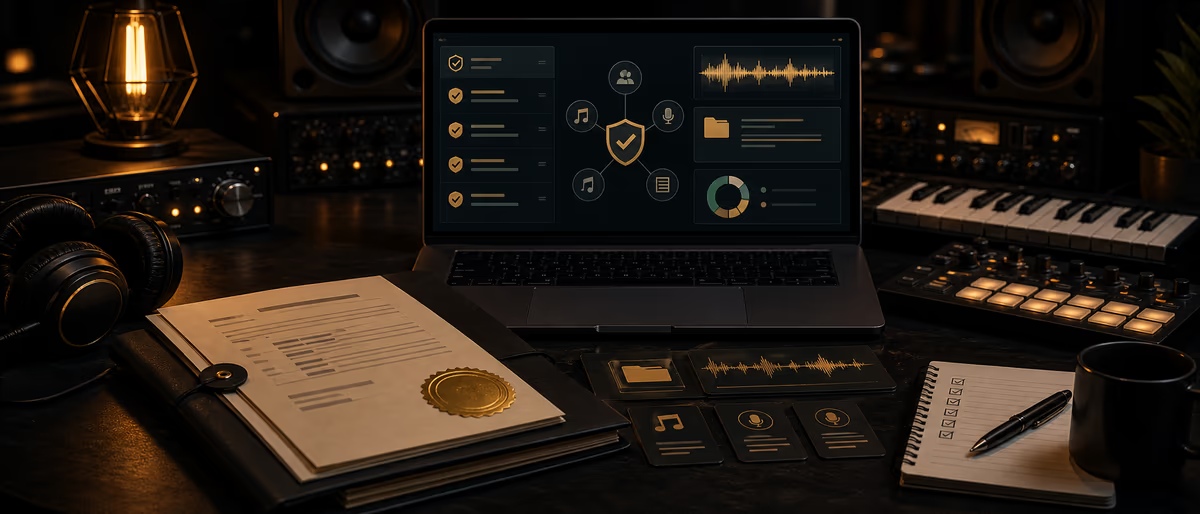
One-stop sync clearance
Místní kontext
Právní, daňová, privacy, autorská, licenční a smluvní pravidla se liší podle jurisdikce. Tento článek berte jako redakční výchozí bod, ne jako právní nebo účetní radu.
Před jednáním ověřte místní zákony, platební metody, dostupnost platforem, daně a správu hudebních práv ve vaší zemi.
Rychlá odpověď
One-stop clearance means a buyer can license both the master recording and the composition (publishing) from one deal or coordinated packet without hunting five rightsholders. For indie catalogs, that means clean chain-of-title, documented shares, sample clearance, and a readiness sheet supervisors can trust.
What One-Stop Actually Means
Sync buyers (ads, trailers, TV, games, branded content) hate friction. If using your track requires separate clearances from a label, two publishers, a sample owner, and a featured vocalist with no deal memo, many supervisors will skip you for a library that is truly one-stop.
One-stop does not magically erase rights. It means you (or your agent) can grant or obtain all necessary rights on a known timeline and present a single commercial path. For many independents, you own the master and control or co-control publishing via written splits — and you can prove it.
Master vs Composition (Do Not Blur These)
| Layer | What it is | Who often controls it | Sync need |
|---|---|---|---|
| Master (sound recording) | The fixed recording you hear | Label, self-released artist/producer, rights buyer | Master use license |
| Composition (song/work) | Underlying melody/lyrics/arrangement as a work | Writers + publishers / admins | Synchronization license (+ sometimes public performance via PRO contexts) |
| Samples / interpolations | Third-party audio or underlying works inside your track | Original master + publishers | Separate clearances or rewrite |
| Name / likeness / trademarks | Artist brand, logos in cues | Artist/manager/brand | May need publicity/permission language |
| Software / preset packs | Usually not “songs,” but EULAs matter for some commercial contexts | Plugin/sample vendors | Follow commercial-use terms of sources |
A producer who “owns the beat file” still may not control composition shares if co-writers never signed a split, or may not control a vocal master if the singer never signed a work-for-hire or license. One-stop packaging starts by listing every human who touched the rights layers.
Sync Readiness Sheet (Template Fields)
Keep one row per track in a sheet or Notion DB. This is what serious catalogs show agents and what you should complete before cold-pitching supervisors.
| Field | Example | Why supervisors care |
|---|---|---|
| track_title | Glass Highway (Instrumental) | Exact cue naming |
| version | full / 30s / 15s / underscore | Edit needs |
| master_owner | Jane Doe LLC 100% | Who signs master side |
| master_territory | World | Deal scope |
| writers | J. Doe 50% / A. Smith 50% | Publishing math |
| publishers_admins | Self-published / AdminCo | Who signs sync side |
| pro_registrations | ASCAP work #… | Cue sheets later |
| isrc / iswc | US-… / T-… | Metadata hygiene |
| samples | None / cleared pack X / uncleared Y | Deal-breaker scan |
| exclusivity_status | Non-exclusive library OK | Conflict with other deals |
| prior_exclusives | None / Brand Z category lock until date | Category exclusivity clashes |
| lyrics_language | Instrumental / EN clean | Ad sensitivity |
| sensitive_content | None / mild / explicit | Brand safety |
| one_stop_flag | YES — master+pub controlled | Filter for one-stop briefs |
| contact_48h | sync@… / phone | Turnaround |
| quote_notes | MFN / most-favored clauses? | Commercial terms |
| file_links | WAV, stems, alt mixes folder | Delivery speed |
- one_stop_flag = YES only if You can document authority to license master + 100% of composition (or have written power to collect all co-writer approvals within a stated SLA).
- one_stop_flag = PARTIAL Master clear, publishing needs co-writer countersign within N days — still pitchable if you disclose and can hit deadlines.
- one_stop_flag = NO Uncleared sample, missing splits, or third-party label wall. Do not market as one-stop.
How to Build Toward One-Stop
- Paper the past
Collect split sheets, vocal agreements, producer agreements, and sample licenses for every pitchable track. Gaps go to a legal fix list, not a pitch email. - Prefer clearable sources
For new catalog: royalty-free packs with commercial terms you understand, original writing, or fully cleared samples. See also sample clearance basics in related guides. - Register works
PRO registrations and publishing admin (if any) should match the split sheet exactly. - Prepare alt mixes
Instrumental, no-lead, short TV versions, and stems reduce “can you edit by Friday?” failures. - Write a one-page rights summary PDF
Per track or per EP: owners, shares, samples, contact, territory. Attach with downloads. - Define approval SLA
If co-writers must sign, state “all signatures within 48 business hours” only if true.
Red Flags (Supervisors and You)
- “I own everything” with no documents Instant credibility loss. Bring PDFs.
- Uncleared recognizable samples Ads and premium TV often hard-pass. Rewrite or clear before pitching.
- Featured vocalist without a grant of rights Master may be unlicensable for sync.
- Conflicting exclusive library deals You cannot one-stop the same track into two exclusive libraries.
- Publisher share living with an inactive co-writer Disclose PARTIAL and start the countersign early.
- AI-trained or voice-cloned elements with unclear rights Brand legal teams may reject; document sources and policies.
- Missing ISRC / messy titles Not always fatal, but signals catalog immaturity.
- Quote delays past the brief deadline Even perfect rights lose if you answer in five days on a two-day brief.
Supervisor-Friendly Packet
When a brief hits, send only tracks with one_stop_flag YES or honest PARTIAL + SLA. Include: private stream links, WAV download, readiness sheet row export, rights summary PDF, and pricing posture (or “quote on use”).
| Brief ask | You provide | Avoid |
|---|---|---|
| 30s social ad | 30s edit + full + instrumental | Only 5-minute album version |
| Trailer temp love | Clearable alt with same energy if sample risk | “We’ll clear later” on a famous sample |
| Global online | World master + pub confirmation | Territory unknown |
| Category exclusive request | Prior exclusivity log | Silence about an existing brand lock |
Common Mistakes
- Marketing one-stop without publishing control Gets deals killed in legal review and burns agent relationships.
- Ignoring sample pack EULAs Some free packs restrict commercial sync; read terms.
- Pitching before paperwork Interest without signable rights is wasted heat.
- One folder of unlabeled WAVs No versions, no metadata, no readiness sheet = skip.
Review Before Every Pitch Cycle
Before each outreach sprint, filter the readiness sheet for one_stop_flag and open rights gaps. After any co-writer change, sample swap, or exclusive library signing, recompute the flag the same day.
For brief decoding skills that pair with clearance readiness, read how to read a brand music brief. For track prep, use sync-ready track prep and broader film/games/ads licensing guides.
Build a clearable catalog — then study related sync and licensing guides on Plugg Supply Learn.
Learning path
Související answer huby
Často kladené otázky
- What is one-stop clearance in sync?
- A licensing path where master and composition rights can be secured through one coordinated deal or packet without the buyer chasing disconnected rightsholders.
- Do I need to own 100% of publishing to be one-stop?
- You need authority to license 100% of the composition for the use — via ownership or binding approvals from all writers/publishers on a reliable timeline. Disclose partial control honestly.
- Is a beat lease enough for sync?
- Usually no. Standard beat leases are built for artist song releases, not brand commercials. Sync needs explicit master + composition terms for the media use.
- What is the biggest red flag on a sync pitch?
- Uncleared samples or missing split/vocal paperwork while claiming the track is ready for global ads.
- What belongs on a readiness sheet?
- Owners, writer shares, PROs, IDs, samples, exclusivity, brand-safety notes, contacts, and file links — with an honest one-stop flag.
- Is this legal advice?
- No. It is an operational checklist for catalog prep. Use qualified entertainment counsel for real clearances and contracts.